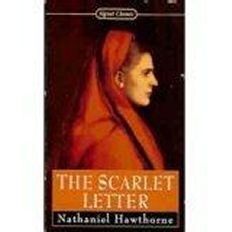
NATHANIEL HAWTHORNE’s
BIOGRAPHY
N. Hawthorne was born on Independence Day (4th July), 1804, in Salem, Massachusetts. His ancestors were among the first people to arrive in the colonies in 1630, in particular William Hathorne who, after getting there, persecuted
Quakers. His son, John Hathorne was one of the judges at the Salem witch trials . These episodes about his family anguished and, at the same time, fascinated Nathaniel throughout his life which was marked by a sort of sense of guilt for the suffering his ancestors had inflicted on innocent people in the first years of the American Puritan colonies. Maybe on account of this sense of guilt Nathaniel decided to add the "w" to his surname in his early twenties, as soon as he left the college. His father was a sea captain who died when Nathaniel was only four of yellow fewer in Suriname. His mother decided to move in with her relatives with all the children, always in Salem, for the following ten years. Later he received a decent schooling in Maine where he met H. W. Longfellow (who will become a famous poet) and F. Pierce (who will become a president of the USA). He graduated at 21 and spent the next ten years reading a lot and attempting to become a writer. Some of his tales were published in literary annuals and magazines. The first recognition arrived with the publication of Twice-told tales (1837). Looking back to that period of his life, he said: "I have not lived, but only dreamed about living". Despite his negative impressions on that moment of his life, those years of solitude and apprenticeship were absolutely important for his formation as a writer and his future production.In 1839 Hawthorne he went to work as a salt and coal measurer at the Boston Custom House, just to save money for his marriage with Sophia Peabody, a girl of Transcendentalist philosophy. When the Whigs got the power, Hawthorne was removed from his job and, fiercely angry, he set about writing what will become his masterpiece, The Scarlet Letter (published in 1850).
He joined the Transcendentalist Utopian Community at Brook Farm (1841) even if he did not share their ideals completely. His considerations about the experience were reported in his novel The Blithedale Romance. After three years of engagement, the couple got married in 1842 and moved to "The Old Manse", in Concord, Massachusetts, where he wrote most of the tales collected in Mosses from an Old Manse. The couple got acquainted with Ralph W. Emerson and Henry D. Thoreau.
The Hawthornes had three children: Una, Julian and Rose. Una died young; Julian had problems and was charged with embezzlement; Rose – after marrying – got Catholic and remained widow became a Dominican nun. She founded the Dominican Sisters of Hawthorne who took care of victims of cancer.
Another of his friends was H. Melville who dedicated his masterpiece, Moby Dick, to his friend in "
admiration for his genius " and that considered him as the "American Shakespeare". Unfortunately none of letters that the two writers wrote to each other have survived.In 1852 Hawthorne wrote a political biography of his friend F. Pierce and, once elected President, Pierce awarded him with the position of US Consul in Liverpool (1853) for four years. From Britain he left to travel around France and Italy and at his return to the US – 1860 – he published The Marble Faun.
He died while sleeping on 19th May 1864 in Plymouth (New Hampshire) and was buried in Concord’s cemetery (Massachusetts). His wife Sophia and their daughter Una were originally buried in England, but in June 2006 their bodies were re-interred near him.
(Isabella Marinaro)
